Product Details
BPC-157 10MG is a research compound studied for tissue repair, cellular recovery, and inflammatory-response pathways.
For research use only.
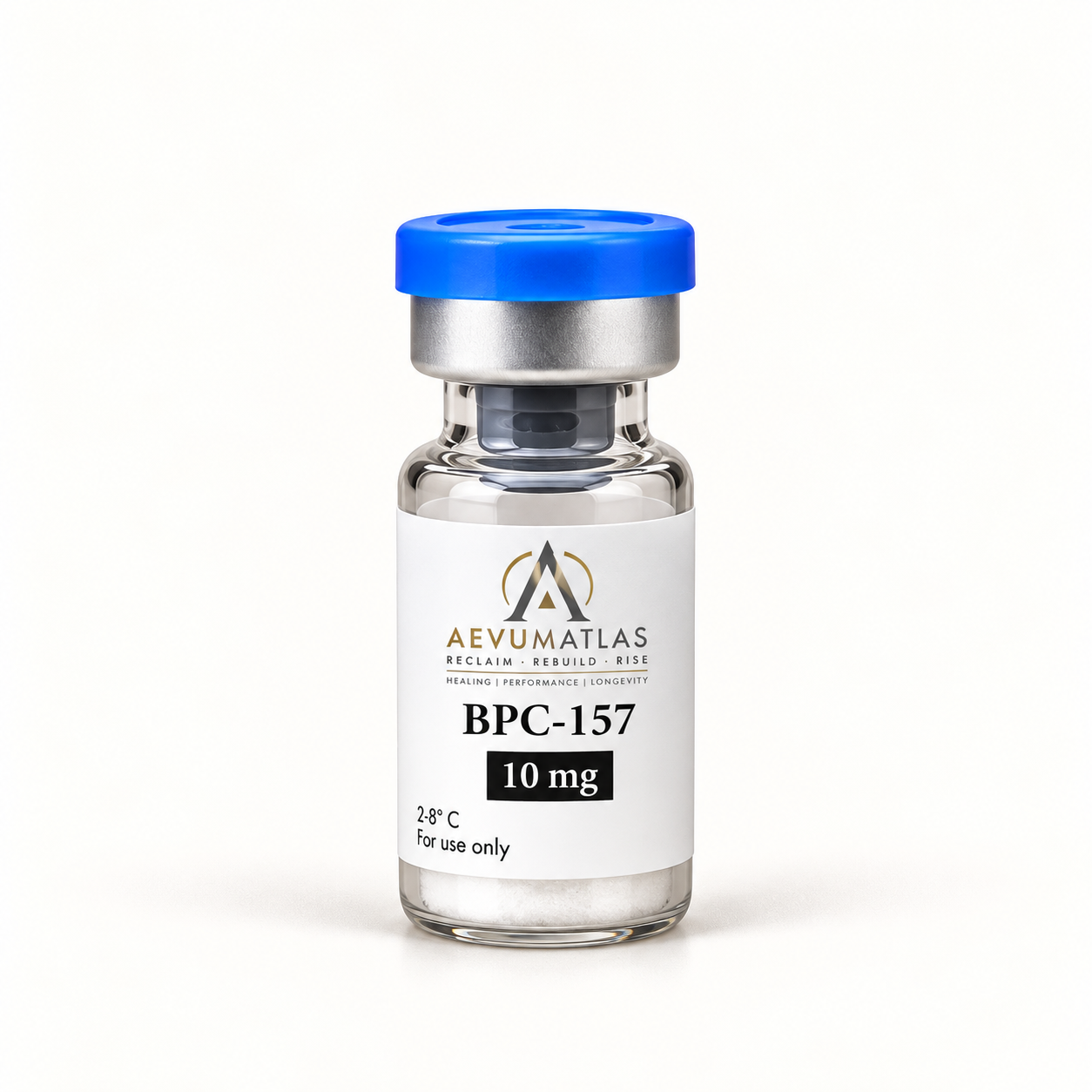
BPC-157 10MG
BPC-157 is a synthetic peptide composed of 15 amino acids (a pentadecapeptide).
Its sequence is:
Gly-Glu-Pro-Pro-Pro-Gly-Lys-Pro-Ala-Asp-Asp-Ala-Gly-Leu-Val
What is BPC-157 Being Studied For?
BPC-157 has attracted interest for its potential role in tissue repair and recovery, particularly involving tendons, muscles, and the gastrointestinal tract.
Most of this evidence currently comes from laboratory and animal studies.
Tendon Repair
Laboratory studies using tendon tissue and tendon fibroblasts suggest that BPC-157 may:
- Accelerate the outgrowth of tendon fibroblasts
- Increase fibroblast migration, helping repair cells move toward an injured area
- Improve fibroblast survival under oxidative stress
- Promote fibroblast spreading, an important step in tissue repair
Interestingly, BPC-157 did not simply cause tendon fibroblasts to multiply directly. Instead, it appeared to improve several cellular processes involved in creating an environment favorable for healing.
Growth Hormone Signaling
Research has also found that BPC-157 can increase growth hormone receptor expression in tendon fibroblasts.
This may make tendon cells more responsive to the body’s own growth hormone and enhance downstream growth hormone–JAK2 signaling, potentially supporting cell proliferation and tendon repair.
Why Is BPC-157 Interesting?
BPC-157 is being investigated for potential effects on:
- Tendon & ligament repair
- Muscle recovery
- Tissue healing
- Gastrointestinal protection
- Cellular resilience
Important Perspective
BPC-157 remains an experimental peptide.
Although laboratory and animal research has produced interesting findings, high-quality human clinical evidence remains very limited, and its long-term safety and effectiveness have not been established.
BPC-157 is not FDA-approved for treating injuries or other medical conditions.
For Research Purposes Only.
Not for human consumption.
Explore our other research compounds and nutritional supplements.
Scientific literature on BPC-157 is available through PubMed.
$60.00